The problem
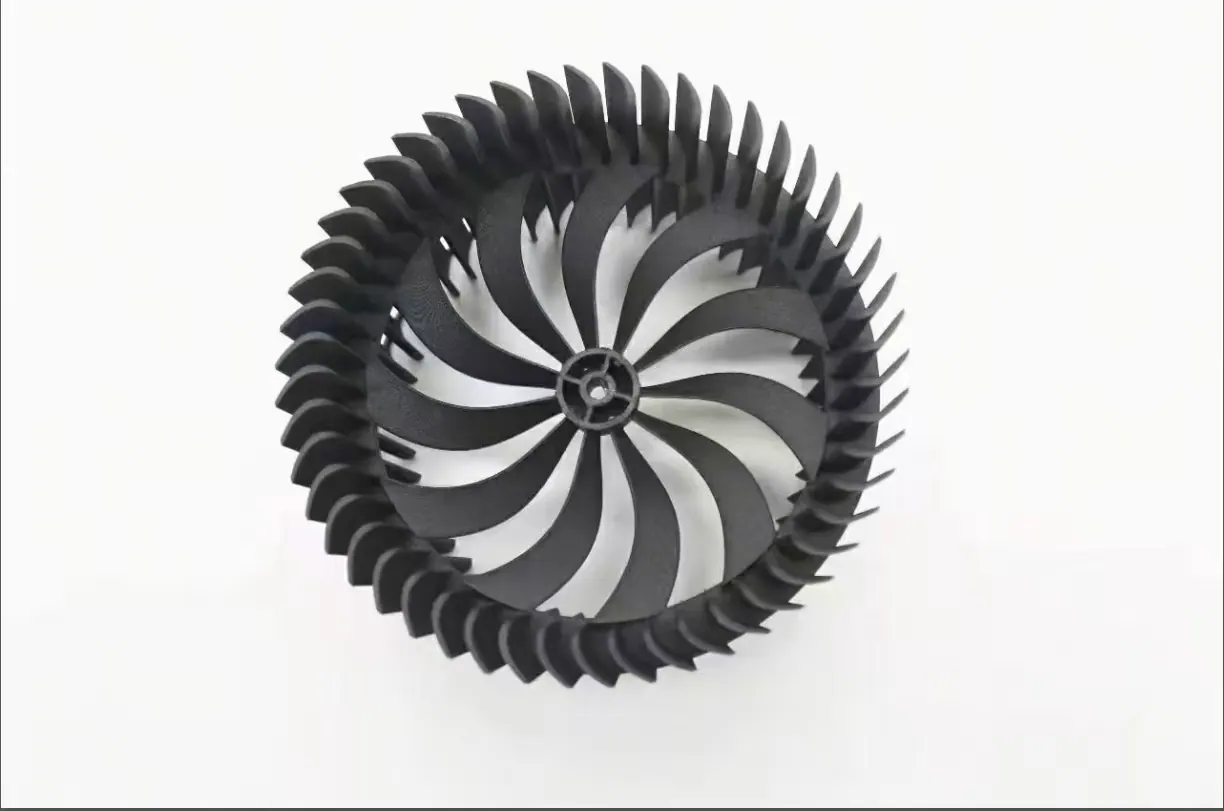
The impeller was part of a UAV propulsion test programme. The previous supply route produced parts that met the drawing but not the intent: blade surfaces needed hand blending, which changed the profile unpredictably, and the parts were heavy because the blade thickness had been left conservative to survive the finishing step.
What we did
The blade surfaces were programmed as continuous five-axis toolpaths so the cutter stayed short and presented at a consistent angle to the surface. That removed the deflection that had been causing inconsistency, and it removed the need for hand blending — which in turn meant the blade thickness could be machined as designed rather than as a safe guess.
The shaft interface was machined in the same setup as the blade datum, so runout is set by the machine rather than by a fixture that has to be re-aligned.
Verification
Blade profiles were measured against the supplied model with CMM comparison, and the shaft interface was measured directly. Both revisions were delivered inside the test window, so the programme did not slip while the design was being tuned.