Skip to content
Anodizing

Anodizing

Clear, black and coloured anodizing for aluminium parts — corrosion resistance and wear performance in a finish that still looks like metal.

Types
Type II decorative and Type III hard anodizing
Thickness
5–25 µm typical, thicker for hard anodizing
Colours
Clear, black, and dyed colours to sample or RAL reference
Masking
Threads and conductive surfaces masked on request

How we hold this quality

Colour consistency

Colour is checked against an approved sample before the batch runs, because alloy composition affects how a dye takes and how dark black appears.

Wear resistance

Type III hard anodizing produces a thick, hard oxide layer for sliding, wear-facing and handling-critical parts.

Selective masking

Mating threads, bores and grounding surfaces can be masked so the finish does not change the fit or interrupt electrical contact.

Pre-finish preparation

Bead blasting, brushing or polishing before anodizing sets the final appearance — the finish is decided before the part enters the tank.

Anodizing converts the surface of an aluminium part into a hard oxide layer. It is not paint: the finish grows from the metal, which is why it keeps a metallic look and resists wear and corrosion far better than a coating of the same thickness.

Choosing the anodizing type

Type II (decorative) gives 5–25 µm with a broad colour range. It is the right choice for consumer product housings, panels, brackets and instrument cases where appearance matters.

Type III (hard anodizing) produces a much harder, thicker layer for parts that experience sliding wear, abrasion or frequent handling — linear guides, wear plates, machine components and tooling.

Preparing the surface

Machining marks show through anodizing, so the surface preparation is part of the specification. Bead blasting gives a uniform matte appearance and hides light tool marks; brushing produces a directional grain; polishing gives a bright, reflective finish. Decide which one you want before the parts are machined, because it also changes the pre-finish allowance.

Process & part gallery

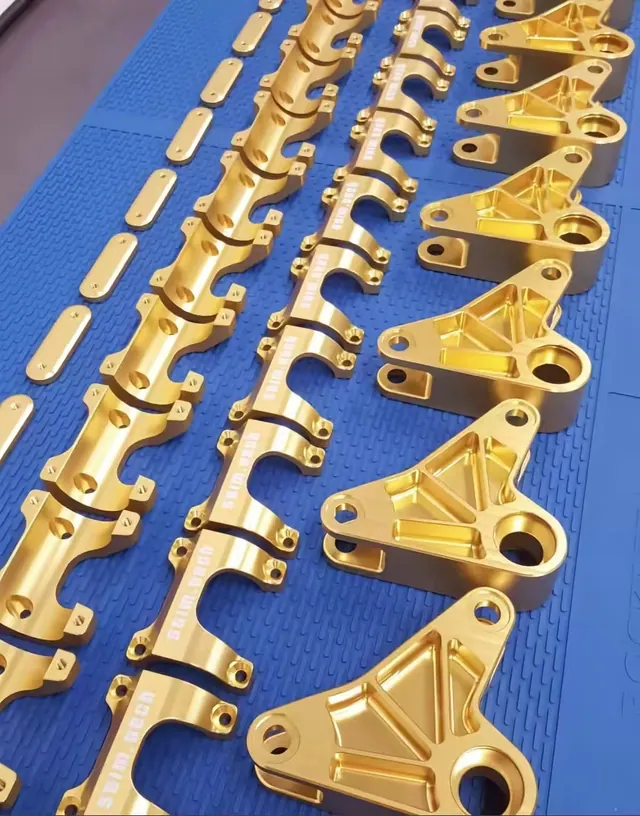
Anodized parts after colour finishing
Anodized housing with machined mating features

How it works

From drawing to delivered part

  1. 1

    Send drawings

    Upload STEP, IGES, DXF or PDF files with material, quantity and finish.

  2. 2

    Engineering review

    We check manufacturability, tolerances and finish for this process.

  3. 3

    Quote and approve

    You receive unit price, lead time and any design questions in writing.

  4. 4

    Produce & inspect

    Manufacturing runs against an agreed inspection plan.

  5. 5

    Ship and support

    Parts are packed, documented and shipped, with support for revisions.

FAQ

Anodizing — frequently asked questions

Will anodizing change my part dimensions?

Yes, slightly. The oxide layer grows into and out of the surface — roughly half of the coating thickness adds to the dimension. On tight tolerances, tell us the finished dimension and we will machine to suit.

Why did my last supplier's black anodizing look purple?

Dye uptake depends on the alloy, the oxide thickness and the sealing process. 7075 in particular goes bronze or purple. If colour matters, send a sample and specify the alloy, and approve a first article before the batch.

Can you keep threads conductive?

Yes, we mask threads, bores and grounding points so they stay bare and dimensionally correct, which matters for parts that also carry an electrical connection.

Start a project

Request a anodizing quotation

Upload your CAD files with the material, quantity and finish. Our engineers will review the drawing and reply with pricing and lead time.