Skip to content
Sheet Metal Bending

Sheet Metal Bending

Press brake bending with matched tooling for enclosures, brackets, chassis and panels, holding angles and bend positions to drawing.

Thickness
0.5 – 6 mm typical
Tolerance
±0.1 mm typical on formed features, ±0.5° on angles
Bend length
Up to 3000 mm
Tooling
Standard V-dies plus custom tooling where geometry requires it

How we hold this quality

Bend allowance control

The flat pattern is calculated for the material, thickness and tooling in use — not taken from a generic table — so formed dimensions land where the drawing says.

Multi-bend parts

Boxes, channels, Z-sections and enclosures with several bends are sequenced to avoid tool collisions and marking on visible surfaces.

Cosmetic protection

Protective film, nylon dies or sacrificial material are used where the part has a visible surface finish.

First-article approval

For new tooling or demanding parts, a first article is formed and measured before the rest of the batch runs.

Bending turns flat cut blanks into functional parts, and it is where small design details have the biggest effect on cost and quality. The bend allowance, the sequence and the tooling all have to be right at the same time.

Design rules for formed parts

  • Use the material thickness as a default inside radius unless the design requires otherwise.
  • Keep hole-to-bend distance at 1.5× thickness plus radius to avoid hole distortion.
  • Add bend reliefs where two bends intersect.
  • Design for a standard die opening where possible — custom tooling adds cost and lead time.
  • Give the flat pattern if you have it; we will verify it against the finished dimensions either way.

Formed parts are then welded, hardware-inserted or assembled as required — see welding and assembly.

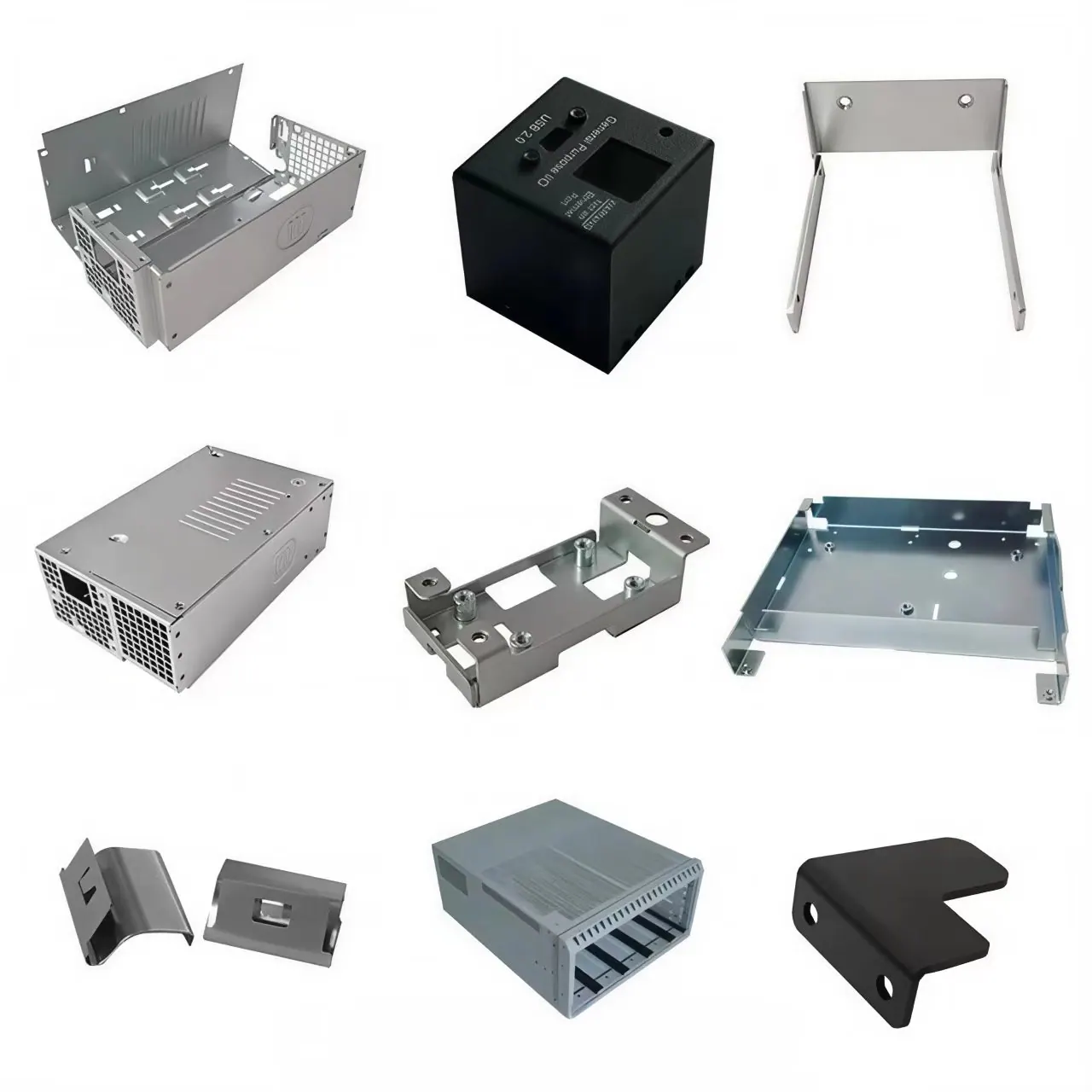
Process & part gallery

Formed sheet metal enclosures
Bent brackets with multiple forming operations
Formed panels and covers

How it works

From drawing to delivered part

  1. 1

    Send drawings

    Upload STEP, IGES, DXF or PDF files with material, quantity and finish.

  2. 2

    Engineering review

    We check manufacturability, tolerances and finish for this process.

  3. 3

    Quote and approve

    You receive unit price, lead time and any design questions in writing.

  4. 4

    Produce & inspect

    Manufacturing runs against an agreed inspection plan.

  5. 5

    Ship and support

    Parts are packed, documented and shipped, with support for revisions.

FAQ

Sheet Metal Bending — frequently asked questions

What bend radius should I specify?

A good default is the material thickness; tighter radii risk cracking, particularly on aluminium and high-strength steels. If the design needs a sharp bend, tell us the material and we will advise on tooling and orientation.

How do you stop visible surfaces from being marked?

We plan the bend sequence so the tooling contacts non-cosmetic faces where possible, and use protective film or nylon dies on parts that will be anodized, painted or left bare.

Can you form parts from stainless steel without cracking?

Yes. Stainless steel work-hardens and needs a larger bend radius with the bend line oriented across the rolling direction. We check the grain direction on parts that will be formed heavily.

Start a project

Request a sheet metal bending quotation

Upload your CAD files with the material, quantity and finish. Our engineers will review the drawing and reply with pricing and lead time.