Skip to content
Equipment

Equipment

The machining, fabrication, finishing and inspection equipment behind our published capability — and what each machine is best used for.

Machining
3, 4 and 5-axis machining centres and CNC lathes with live tooling
Fabrication
Fibre laser cutter, press brakes, TIG and MIG welding stations
Finishing
Anodizing, plating, coating and painting lines
Inspection
CMM, optical measurement and calibrated hand instruments

How we hold this quality

One site, one sequence

Machining, fabrication and finishing sit in the same workshop, so parts do not travel between suppliers and quality problems surface earlier.

Fixtures in-house

Soft jaws, fixtures and inspection gauges are made in the same workshop that uses them, which shortens setup and keeps datums consistent.

Calibrated measurement

Measuring instruments are calibrated on a defined cycle, and calibration records are available with inspection documentation.

Capacity transparency

We quote from the machine the part will actually run on, so the lead time in the quotation is based on real capacity rather than a catalogue figure.

Capability statements are only useful if you can see what produces them. This page describes the equipment classes behind our process pages and what each one is best used for.

Machining

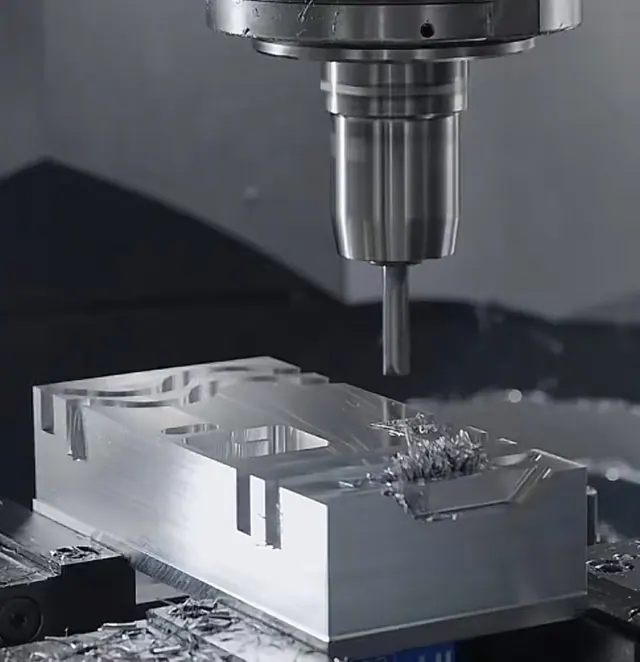
Vertical machining centres in 3, 4 and 5-axis configurations, used for prismatic parts, multi-face work and complex sculpted geometry respectively. CNC lathes with live tooling cover rotational parts and turn-mill features in a single order.

Fabrication

A fibre laser cutter for sheet profiles, press brakes with CNC back gauges for forming, and TIG and MIG welding stations for frames, brackets and enclosures.

Finishing

Anodizing, plating, powder coating and painting are managed as controlled processes with colour and appearance approval before batches run.

Inspection

A CMM supports geometric verification on complex parts, backed by optical measurement and calibrated hand instruments for in-process checking. See Inspection for how these are used in practice.

Need the model-level equipment list for a specific RFQ? Ask us and we will send it with the quotation.

Process & part gallery

Machining centre cutting a mould cavity
Five-axis machining in process
Fixture plate with machined components

How it works

From drawing to delivered part

  1. 1

    Send drawings

    Upload STEP, IGES, DXF or PDF files with material, quantity and finish.

  2. 2

    Engineering review

    We check manufacturability, tolerances and finish for this process.

  3. 3

    Quote and approve

    You receive unit price, lead time and any design questions in writing.

  4. 4

    Produce & inspect

    Manufacturing runs against an agreed inspection plan.

  5. 5

    Ship and support

    Parts are packed, documented and shipped, with support for revisions.

FAQ

Equipment — frequently asked questions

Can I see a machine list with models?

Yes — contact us and we will send the current equipment list for the process you are quoting, together with the working envelope and the machine the part would run on.

How is capacity handled during busy periods?

Capacity is confirmed at quotation. If a schedule changes, we tell you before the promised date rather than after it, and we will offer a partial shipment where that helps.

Related processes

Start a project

Request a equipment quotation

Upload your CAD files with the material, quantity and finish. Our engineers will review the drawing and reply with pricing and lead time.